I’ve always been surprised by the number of people who criticize PETA for operating animal shelters which euthanize animals. There are certainly many grounds on which to criticize PETA, but I’ve never thought the fact that they kill unwanted pets which no one is capable of providing for is a particularly good one. Ultimately, euthanizing animals which cannot reasonably be treated to a meaningful and pleasurable life is clearly consistent with the utilitarian philosophy from which many animal rights activists draw inspiration (note, for example, Peter Singer’s strident support for human euthanasia and infanticide, alongside his concern for animals). Frankly, the “hypocrisy” of PETA euthanizing animals is far less than the hypocrisy of the many “animal-lovers” who eat meat but love their pets enough to cry foul when PETA chooses the least-bad option to address the systematic problem of pet overpopulation.
A recent poster on this blog, however, offered a more intriguing allegation: that PETA’s euthanasia policy is part of a broader attempt to make pets extinct.
There are a few reasons why the elimination of pets might be bad news for humans. First off, there are the obvious uses of companion animals for assisting blind and deaf individuals. Most of us have heard about the medical and psychological studies that have shown that having pets makes human beings healthier. These are, of course, scientific attempts to codify common sense: most of us know that in a world where humans are often atomized and isolated from one another, pets provided much needed friendship, affection, and unconditional love.
My family “owns” two dogs, and I can certainly see simply from my own experience that all of the above are true. Nonetheless, I still find compelling the arguments of those who have suggested that domesticated animals are actually bad for humans in a broad sense. Jim Mason – who co-authored “The Way We Eat” with Singer in 2006 – wrote an earlier book, “An Unnatural Order,” that suggests that the subjugation of animals was, in a sense, a rehearsal for our later domination of the earth and one another. According to Mason, by dominating and domesticating animals, we create in ourselves a mindset that allows us to dominate more than just animals. It’s a complicated argument, but it’s worth considering, and it is consistent with less far-flung connections that have been demonstrated between abuses of animals and abuses of humans.
The point of being an animal rights activist, though, is that our sphere of ethical consideration is wider than just humans. And so, however we decided to weight the above evidence as to whether dogs and cats are “good” for humans, we ought also to ask whether it’s good for dogs and cats. In this respect, I have to agree with Gary Francione that if there were two dogs left on the planet, I would not let them breed.
I’m sure many of us who have derived a great deal of pleasure from the company of animals – myself included – shudder at the above statement. But when we really look at the root of the issue, I think the problem with the very idea of domesticated animals becomes clear. Fundamentally, PETA has to euthanize thousands of animals because we have bred entire species of beings that are completely helpless. Dogs and cats may seem happy, but – without being inside their heads – I imagine that their lives lack the fulfillment that would come from a free life in the wild. They are utterly dependent on others, and I submit that this means their lives can never be that much more valuable than that of a particularly well-treated human slave.
I sincerely doubt that PETA actually wants to rid the world of pets. PETA’s thinking tends to be short term and focused on the immediate alleviation of animal suffering (hence their support for things like Proposition 2 in California). I doubt something as far fetched as the elimination of pet ownership will ever make it onto their radar screen. But I do think that reconsidering our relationship with pets is important, if nothing but for the role such animals play in our broader mindset.
Showing posts with label Euthanasia. Show all posts
Showing posts with label Euthanasia. Show all posts
Wednesday, May 20, 2009


Thursday, April 16, 2009
Tempermant Testing Fails to Evaluate Shelter Dogs
While I was interning at Farm Sanctuary a dog was dumped on its grounds. As the farm does not take in dogs, he was sent to Tompkins County SPCA, a no-kill shelter in Ithaca. When I called to check up on him, I learned that he was scheduled to be put down that day because he had failed temperament testing. He tested positive for "rough play," "possession aggression" and "food aggression". Having spent time with the dog, I knew this could not be the case. After arguing with staff on the phone they agreed to hold him until 5pm and release him to me, as he was "dangerous" and "un-adoptable."
I was able to watch a video of the tests they did to evaluate him. During one, he was chained to a wall in two spots and poked at with a large rubber arm on a stick. He was given pig ears and other treats while the arm poked at his face trying to knock food, toys and pig ears out of his mouth. At some point, he growled, backed away from the arm and snapped. This led them to deem him too dangerous to be adopted. During another test, they had him play and jump on a man with a hockey stick, who would use the stick to block and push the dog off and rough him up. This was deemed rough play, but was not enough to fail him.
I had to sign legal forms, which said that the dog cannot live in Ithaca, is a danger to society and that I accept all responsibility. After being warned again about how dangerous he was, they walked him out and when he saw me he trotted over and placed his head over my shoulder and tried to curl up in my lap. He sat there, leaned into me and licked my cheek. When I stood back up to sign the rest of the forms he trotted over to my friend, Zoe, (who he'd never met until then) and leaned into her chest with his head waiting for the affection.
This is the e-mail I wrote to the shelter about how Party (that is his name) has been doing since I took him home. My hope is to make them realize the inadequacies of their temperament tests. Party tested positive for rough play, food aggression and possession aggression. In y experience with party, he has neither.

He is the sweetest boy I have ever met and he loves everyone. In no way is he "a danger to society".
I was able to watch a video of the tests they did to evaluate him. During one, he was chained to a wall in two spots and poked at with a large rubber arm on a stick. He was given pig ears and other treats while the arm poked at his face trying to knock food, toys and pig ears out of his mouth. At some point, he growled, backed away from the arm and snapped. This led them to deem him too dangerous to be adopted. During another test, they had him play and jump on a man with a hockey stick, who would use the stick to block and push the dog off and rough him up. This was deemed rough play, but was not enough to fail him.
I had to sign legal forms, which said that the dog cannot live in Ithaca, is a danger to society and that I accept all responsibility. After being warned again about how dangerous he was, they walked him out and when he saw me he trotted over and placed his head over my shoulder and tried to curl up in my lap. He sat there, leaned into me and licked my cheek. When I stood back up to sign the rest of the forms he trotted over to my friend, Zoe, (who he'd never met until then) and leaned into her chest with his head waiting for the affection.
This is the e-mail I wrote to the shelter about how Party (that is his name) has been doing since I took him home. My hope is to make them realize the inadequacies of their temperament tests. Party tested positive for rough play, food aggression and possession aggression. In y experience with party, he has neither.
Hello,
This is Amanda Dickie. Your shelter redeemed a young dog named Party dog to me last November. I just wanted to let you know that he is the sweetest dog out there. And despite what your tests may have indicated, he does not have possession aggression or food aggression. He met my mother for the first time on the ride home and was eating chips out of her hand the whole way back.
When we arrived home we had him sitting and waiting for his food. Once or twice he jumped the gun and started eating before he had permission, but my 54 -year-old mother was able to control him without protest. After he got settled here everyone approaches him while eating and he is fine. My mother and I regularly take his food dish from him while he is eating and just waits for us to give it back.
He is learning to take treats from people gently. Whenever he is too rough, we take the treat back and try again until he gets it right. He has never growled, snapped or bitten anyone since leaving your shelter. We have four cats, who occasionally eat out of his bowl. When they do this, he sits back and waits for them to finish.
There is a constant flow of new and strange people in our house and party is excited and happy to meet everyone of them. He no longer jumps on people when they come to the door, and is happy when strangers approach him. He also loves small children and is extra gentle around them.
This dog is one of the kindest, gentlest and friendliest dogs I have ever met. Kids pull his tail, blow in his ears and pull on his cheeks, but he never retaliates with aggression.
We just wanted to pass along this message in hopes that you might reconsider using temperament testing as it is an unfair system that sets perfectly adoptable and loving dogs up for failure.
Thank you,
Sincerely Amanda
506-849-3950
With Love, Amanda Dickie
"As long as people will shed the blood of innocent creatures there can be no peace, no liberty, no harmony between people. Slaughter and justice cannot dwell together."
- Isaac Bashevis Singer,Writer, Nobel laureate (1904-1991)
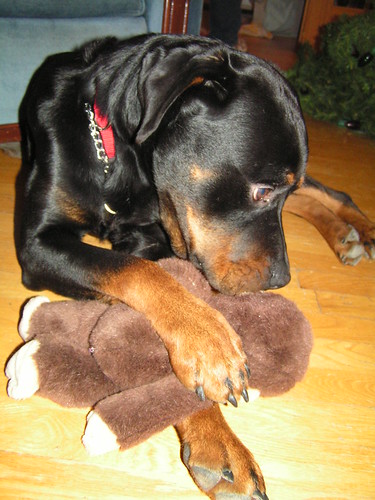
He is the sweetest boy I have ever met and he loves everyone. In no way is he "a danger to society".
Subscribe to:
Posts (Atom)